Growing Up in the Fold: Childhood Religious Terrorization


Krispin and DL discuss religious terrorization of children, that is when kids are exposed to religious concepts that terrify them. We talk about what it's like to be a kid who was taught about hell, demons, end times and more.
This episode is part of a series discussing how religious authoritarian parenting books approached them, what's typical development and what the long-term impacts might be from being raised under religious authoritarian parents (in a high control religion).
Here are the sources we used in this episode:
Akawu, Monday, et al. "Hypersensitive Personality and Empathy as Predictors of Hell Anxiety among Undergraduate Students: The Need for Psycho-Spiritual Therapy." International Journal For Psychotherapy In Africa 9.3 (2024).
Cole, M. (2023). Psychological effects of Christian teachings about sin and hell. Mental Health, Religion & Culture, 26(8), 736–754. https://doi.org/10.1080/13674676.2023.2261412
Cranney, S., Leman, J., Fergus, T. A., & Rowatt, W. C. (2018). Hell anxiety as non-pathological fear. Mental Health, Religion & Culture, 21(9–10), 867–883. https://doi.org/10.1080/13674676.2018.1443436
Exline, J. J., Wilt, J. A., Pargament, K. I., & Hall, T. W. (2026). Seeing oneself or others headed for hell or purgatory: Links with spiritual struggles and mental health. Psychology of Religion and Spirituality. Advance online publication. https://doi.org/10.1037/rel0000634
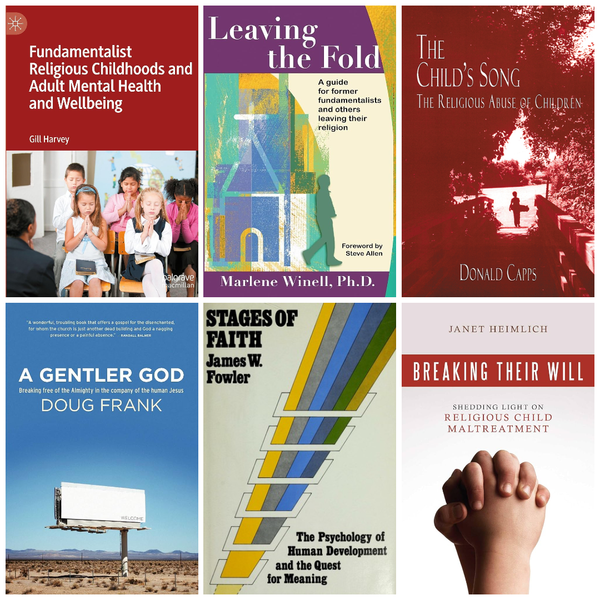
Harvey, Gill (2026) Fundamentalist Religious Childhoods and Adult Mental Health and Wellbeing
Howes, Cameron "Could interreligious dialogue be an unexpected antidote to eschatological anxiety?"
Nie, Fanhao, and Daniel VA Olson. "Demonic influence: The negative mental health effects of belief in demons." Journal for the Scientific Study of Religion 55.3 (2016): 498-515.
Youvan, Douglas C (2024). Raptors and Rapture: An Examination of Physical Threats and Theological Misinterpretations. 10.13140/RG.2.2.11279.39842.
We'd love to hear from you all about what resonates and anything you'd add to the conversation! Leave a comment below or head over to the discord to discuss the episode.
Thank you so much for your continued support!
Transcript (edited for clarity)
Krispin: Hello, patrons. Welcome to Growing Up in the Fold, a series on the STRONGWILLED podcast where we're talking about the developmental impacts of high control religion and religious authoritarian parenting. Today we're talking about how scary religion can be for kids, or for you as a kid, how scary it was.
DL: Yeah.
Krispin: I'm here with my lovely co-host, DL.
DL: Lovely.
Krispin: Lovely.
DL: Oh. Yep, we're here. We're totally excited to talk about everything that terrorizes children in religious authoritarian spaces.
Krispin: I have to tell you all something embarrassing.
DL: What?
Krispin: I sort of overlooked this whole topic. I was thinking in terms of developmental stages.
DL: Yeah.
Krispin: And I didn't really... I was like, "What's going on in this stage? What's going on in this stage?" And I didn't really think too much about this looming, like, these really scary ideas of, like, hell and demons and Satan and the end times. And DL was like, "When are you going to talk about this?"
DL: Well, it’s interesting. It's similar to corporal punishment. It's something that influences a lot of different developmental stages. But so we have to do a separate episode just to talk about it. And this one, it keeps growing, right? Because both you and I obviously have personal connections, things that terrified us when we were kids. But there's lots to cover.
Krispin: Right, yes.
DL: So that's what we're doing today.
Krispin: And as I say that, just to be clear, it's not that I haven't thought about the impacts of these things.
DL: Yeah.
Krispin: As people in my life will attest to, there was a time where I basically only talked about hell for like three or four years. And the impacts and figuring it all out. So.
DL: Yeah. But even then we were thinking more on adults, but I think this is a great time, this is a great spot to put this episode, because it's around that middle childhood era where this stuff really gets cemented into you. And, you know, that's obviously one of the main purposes of terrorizing children into religious commitment, is that you want to do it early, but where they can actually start to understand some of the significance.
Krispin: Mm-hmm. Right.
DL: And so actually, you know, this is probably going to be a theme in this whole podcast episode today, is our experience, and both of us were raised Evangelical, but I do believe this is in other communities too, is that there actually is a bit of existential talk introduced to children in ways that maybe other kids aren't getting.
Krispin: Mm-hmm.
DL: Asking kids to think about eternity, consequences, eternal consequences all this stuff at a pretty young age. So that's also interesting to think about.
Krispin: Right, yeah. I'm definitely not opposed to talking to kids about the afterlife if you want to be like, "Yeah, you're going to see Grandma in heaven someday."
DL: Yeah.
Krispin: Like, I mean, I don't know. But that's really different than like, "You'd better do these things or you're going to, you know, be in eternal conscious torment for eternity."
DL: Yeah. And even just asking kids to be like, "Think about what happens when you die," this is such a central tenet of Christianity, right?
Krispin: Mm-hmm.
DL: And again, that's really awful to do that when you have such a specific, like, "And you have to do this, this, and this in order to not be tortured forever."
Krispin: Right.
DL: And trust me, they are telling kids about what hell's like. So.
Krispin: Right, yeah. Totally. Yeah. Just to start with the basics to understand this, this is what they're telling the adults, right? I think about, like, Marlene Winell, she says basically high-control religion has two messages: you are not safe and you are not okay.
DL: Unless you're in the fold.
Krispin: Right, exactly. You have to stay in the fold to be okay and to be safe. And so, so looking at that first one, you are not safe, right? That is just kind of the basis of high-control religions, that you need us to keep you safe from these existential threats, these invisible threats, that you don't actually have any evidence of.
DL: Yeah, and this actually, just real quick, I want to say, us doing this whole series about what it's like to grow up in the fold versus joining it, I think for adults who've experienced a lot of trauma, a lot of all this stuff, they're drawn to churches because, like, "Hey, I'll get community. I'll be safe. I'll be forgiven," like all this. But for kids, you have to make them feel unsafe first in order to then make them feel safe.
Krispin: Yes.
DL: And that's the doctrines we're talking about today, these things that cause children terror, fear, and to feel unsafe, and then you say, "Okay, here's how you're safe, by doing this, this, and this."
Krispin: Right. That's so true. That's the whole theme of all of the hell houses and just everything, right? You have to scare kids to get them to commit.
DL: Yeah, and it's...You know, being in America, it's like this is just so normalized. It's like, "This is okay. This is a good way to raise kids." And like, oh my God.
Krispin: Right. Yeah. My plan is this month to release an article for our website about some of the people that have been talking about the impacts on kids for years. I wanted to just highlight a couple of folks right now.
DL: Great.
Krispin: Janet Heimlich, in her book Breaking Their Will: The Religious Maltreatment of Children, came up with the term religious terrorization, I believe. I hadn't seen it before that. And basically she said it's where, “Children are bombarded by scary ideas, that they must fear God, that eternal damnation or spiritual death awaits apostates, that demons and the devil are eager to possess them, or, at the end times, Armageddon or other apocalyptic events are imminent.”
DL: Okay. Yeah.
Krispin: So, I mean, that covers a lot. And then I also think of Donald Capps, who we mentioned in our last episode because he published with our current publisher.
DL: Uh-huh.
Krispin: He was this professor at Princeton Theological who specialized in the psychology of religion, and he wrote – this was in 1993 or something – "Many religious ideas that children are taught cause them emotional torment, and therefore are inherently abusive."
DL: Yeah. What's the name of that talk he gave? Maybe I’ll Google it.
Krispin: Right. Yeah.
DL: You can find the whole talk online.
Krispin: Yeah. It's called, Religion and Child Abuse: Perfect Together.
DL: Yeah. So I would encourage people to Google that talk, and read it.
Krispin: We can put a link to it in the show notes. It looks like it's available to read on JSTOR. Maybe not, but I'll find it somewhere.
DL: Yeah. And he was saying that to a room full of religious leaders.
Krispin: Mm-hmm.
DL: So it was great. Yeah!
Krispin: Right. Thinking about this idea of these concepts being emotionally tormenting, what was your top fear?
DL: Oh, definitely the end times.
Krispin: Mm-hmm.
DL: Because that became my mom's obsession, so it’s something she talked to me a lot about from when I was quite young. But I think I can just remember the impacts of that the most because it was still a huge part of my life as a teenager.
Krispin: Mm-hmm.
DL: And I shared quite a bit about this, but basically my mom extinguished all of my hopes for the future. And also, you know, I was told I was going to be a martyr before I was 16. That obviously didn't happen, but then it was Y2K. You know, the goalposts were always moving and I could never feel any hope or positive feelings about the future. It was just really scary, and I had to not have fear because I trusted Jesus, you know? So it was like quite the double whammy there.
Krispin: Right. Yes.
DL: So that impacted my life and my mental health in huge ways.
Krispin: Yeah. For me it was a martyrdom/hell combo.
DL: Okay.
Krispin: I read these missionary stories, but I knew that being a missionary meant that, in my mind, you could get eaten by cannibals, you could get bitten by a poisonous snake.
DL: Oh, my God. These racist books we read.
Krispin: Right, exactly. All these dangers. And in my mind, I was like, well, if that can happen, it's going to happen to me. That was sort of my feeling about life. And so I remember thinking, well, I can either answer God's call and go and die, or I can disobey it like Jonah and go to hell, because if I'm disobeying God, that doesn't mean that I actually trust him, and that means that he's not actually my Lord and Savior. And I'm risking hell.
DL: Right. Yeah. Yeah. So each of us had way more fears than just those, but those I guess were the top two. You know?
Krispin: Right. Yes, yeah, exactly. And as we're talking about this, there's really not any developmental research to my knowledge about the impacts of these things on kids.
DL: Which is shocking.
Krispin: Yes, it is.
DL: Like, what the hell?
Krispin: Right? I mean, it just-
DL: No pun intended. Why aren't they researching this? I mean, I know why.
Krispin: Mm-hmm. Well, I mean, yeah, Christian privilege, just dominance of Christianity. I mean, yeah, that's a huge question. Part of it is, I really distrust a lot of the people doing the research, because they're coming out of places like Baylor University.
DL: So it's Christians who are researching this.
Krispin: Mm-hmm.
DL: Okay. Well.
Krispin: So, and, they're like, "Yeah, Christianity has lots of good mental health impacts." But I also, there's just so little research-
DL: So obvious. We’re so well adjusted!
Krispin: Right? There's so little research on this stuff. The research we're going to talk about today is more about adults, or young adults, which sort of fits in that developmental piece. We're going to be talking about how young adults and their beliefs about demons impact their mental health. So, but yeah, in terms of specifically about growing up with this, this is a lot of us analyzing what we think, while incorporating some of the research on how it impacts adults.
DL: And we really hope in the future research is done on how these beliefs impact young children and developmental stages. So.
Krispin: Yes. Right. Totally. Yeah, so we're going to go through three main things – hell, demons, and the end times – and talk about each of those, but let's start with hell. And we're going to talk about, what's the function of this in the group? What does the research say about it, and then what do we think the long-term impacts are if you grow up with it?
DL: Yeah.
Krispin: So that's the format for this episode. We're going to start with hell. What do you think is the function of hell?
DL: Oh, well, you know, I think my ideas are a little out there, but for me, and I think everyone can kind of see with hell, it's to scare people into being obedient. You know what I mean? It's sort of like the Santa Claus story, but more horrifying.
Krispin: The horrifying version of Santa Claus, totally. Yep. Mm-hmm.
DL: You know what I mean? And I think I personally have some other beliefs about hell functions, especially because for most of us when we're talking about the fear of hell, it's like a very concrete place, and it's full of torture, pain, all of these things. And so I honestly believe that it helps normalize the torture, pain, and punishment of anyone who is outside your group your small group.
Krispin: Mm-hmm.
DL: And so I think that's what leads to genocidal wars and, you know, all these things. Right. So I see the sociopolitical impact of hell, and it desensitizes you to the suffering of people outside of your fold because that's what you're trained to do.
Krispin: Right, yeah. Totally. I'm so excited to talk about the research in just a minute because it's related to that.
DL: Well, what do you think the function is of hell?
Krispin: Yeah, I think, yeah, keeping people in the fold.
DL: Mm-hmm.
Krispin: Don't quote me on this, but my general understanding is that even though hell and purgatory have been around for a long time in the Christian church, really, Billy Graham brought hell front and center, along with some other fire and brimstone preachers.
DL: Because that's what he was. He was just a fire and brimstone preacher.
Krispin: Yes. Right, and the thing was, culture was changing. People weren't feeling socially obligated to go to church on Sundays, right? And so what do you do to get the young people that could stray? You threaten them with hell.
DL: Yeah.
Krispin: I also think it's just control, and I think it’s control behaviorally, but it also is about control internally, right? For those of us that grew up with this, like, "Well, you really have to believe in your heart." It's not about your actions.
DL: Yes.
Krispin: It's about, do you really trust Jesus? Do you really, obey Jesus on this really deep level? So I think it just really functions to get us more bonded in and loyal on a deep internal level to the cult.
DL: That's great. I'm glad you brought that up because hell anxiety shows up in so many different ways for people. This wasn't my experience, but I know so many people have experienced this, like, they would become a Christian as young children, and then as older children, teenagers, even sometimes young adults, they would get really worried that they had sinned or they had done something wrong.
And so then if there's an altar call and the preacher's talking, brings up hell or brings up... And they feel a compulsion to rededicate their lives because it's like, "Well, I have to make sure." So it's not like a one and done event for most of us in this world. You're right. It becomes this internal control tactic.
Krispin: Right.
DL: And we are policing ourselves because the community is always policing it. But yeah, the end goal is that fear of hell will always be inside of you, even though most of these people are like, "No, no, no," you know? Like they won't say, "Once saved, always saved," but they still benefit from the fact that most people are like, "Am I doing enough?" You know?
Krispin: Right, yeah. And if you've been in evangelicalism, you know about all of the double talk, right? Which is like, yeah, it's not about works. It's not about...You don't have to be perfect. You know? You just have to believe that Jesus is your Lord and Savior. And then they're like, "Oh, but if you're doing this, is Jesus really your Lord and Savior?"
DL: Right? Yeah. Like, someone, someone commented on a post I just put up about this saying one of the biggest things that terrorized them as a child was this idea of, what if they were sinning against the Holy Spirit? What if they were blaspheming against the Holy Spirit, which is a phrase from the Bible. And you know, it's such a good example of, like, it's just one little scripture.
Krispin: Mm-hmm.
DL: Nobody knows what blaspheming the Holy Spirit is, but Jesus said it's the unforgivable sin.
Krispin: Right.
DL: So if you do it, you obviously can't get into heaven. And so this person was like, "I kept worrying I had done that," you know?
Krispin: Right. And I think what that does is it really alerts you to, what are the external expectations of me. Right? What is my religious group telling me? What is the Bible telling me? What are my religious leaders telling me? Because I need to make sure to obey so that I don't take that risk of, you know, the unpardonable sin.
DL: Yeah. Yeah.
Krispin: Right? It just is this extra, like, energy around making sure that you're really following all the rules.
DL: Yeah. Totally.
Krispin: Yeah. Should we talk about research?
DL: Yeah!
Krispin: Okay. So, first of all, I was talking about Baylor University. A Christian university. They came out with a paper in 2018 that said hell anxiety is not pathological. It is a normal response. And part of the reason they got there is that they found that people that generally had high rates of anxiety, it didn't correlate with them having hell anxiety. So that's kind of interesting.
DL: Okay.
Krispin: But what they said is, yeah, a lot of people aren't worried about hell. Like, you only worry about hell if you think that God is punishing or doesn't like you or the, like, negative religious coping. But if you think that God loves you and you're one of the chosen, you don't have hell anxiety, so it's not a problem.
DL: I mean, that's terrifyingly accurate though. But that goes back to what I said is the function, to desensitize people to the suffering of anyone outside your small group.
Krispin: Right exactly. Mm-hmm. Yeah.
DL: Which is a bad thing to have, y'all
Krispin: Right. So yeah, there are a couple of research studies that did look at who is most likely to experience hell anxiety. One is, people that are classified as highly sensitive people. Which by the way, if we're talking about kids, I think kids are highly sensitive people.
DL: Yeah. I agree. Most, I mean, the ones we know.
Krispin: Yeah, that's right. But I'm like, if we can say adults that are highly sensitive are most impacted by the thought of hell in a negative way, I'm comfortable with extrapolating and being like, well, most kids are sensitive. They have big imaginations.
The other people in this study that were negatively impacted by hell were those that had high empathy. So, again-
DL: Well, that's fine, because empathy's a sin. I don't know if you know this, Krispin.
Krispin: Right? Then this other research study looked at, what were demographics of people that were most likely impacted by hell anxiety, and it was queer folks, women, and non-binary people.
DL: Great. Great. I just think, this is bringing up some of my own baggage, which is being a sensitive, autistic kid in these frameworks, if something caused me a lot of distress and anxiety and I was finally able to share that with an adult, they'd be like, "Oh, you're just taking this too intensely. You're fine. You're a Christian. You know, you're saved. You shouldn't have to worry about that." And that's just so upsetting to be told, "Noo, you're taking it too seriously." But that was the whole point. You know?
Krispin: Right. Yeah. Right. They wanted their cake and to eat it too? Or some version of that.
DL: I guess. I don’t know. I don't know.
Krispin: They wanted it both to be good news and not scary, but they also wanted kids to be scared.
DL: But then when you were too scared, you know?
Krispin: Right.
DL: I don't know.
Krispin: Yeah. I want to talk about the long-term impacts, what we think those might be. The first thing that comes to mind for me is that I think for a lot of folks, they have this feeling of like, "Did I do something with later consequences?" The analogy I was thinking of is like when you are speeding on a road and they have the speed cameras and you see the light flash. And you're like, "I don't know if that was me or for someone else, but I guess I just have to wait 45 days to see if I get a ticket in the mail."
I think that's how a lot of people feel about it, is sort of this, like, what if I, what it? Right? I mean, that's also what OCD says, so maybe I'm speaking for all the OCD-er folks out there. But I think it really brings up this sense of like, I can't just trust my immediate experiences of, am I making good choices for my life. It's like I have to always second-guess, because what if I think that I'm making good choices and things seem okay but they're really not.
DL: Yeah, and it's funny, I don't really, I've never considered myself as someone who had hell anxiety as a kid, but I was remembering how, I think I was, nine, my mom gave me this figurine of these praying hands and this little girl nestled in these huge hands, which is also kinda weird, and the verse was, "See, I will not forget you. I've written your name on the palm of my hand," or something like that.
Krispin: Mm-hmm.
DL: And so my mom's like, "When you're scared of not going to heaven, I want you to look at this and think about this verse." So that means I must've been quite scared.
Krispin: Mm. Mm-hmm.
DL: You know? And I was the most perfect child ever, and I always thought I didn't have fear, but I had enough that my mom was like, "Here, look at this Precious Moments type thing instead of coming to me, and just repeat this verse over and over again." So that became a part of my religious OCD rituals.
Krispin: Mm. Mm-hmm.
DL: You know what I mean? I would say that verse over and over and over again, and just stuff like that. You know? I'm like, what?
Krispin: Yeah. Yeah, exactly.
DL: To have a kid have to do that at night every night is not great.
Krispin: It says something. Uh-huh. Yeah. And I just think about the existential terror of imagining what it would be like to suffer for eternity, and just what that could do to your brain in terms of feeling safe in the world.
DL: I thought about it for other people, and it really upset me.
Krispin: Uh-huh, yeah.
DL: And I also... Is this a safe space to say that the Christian version of heaven also was terrifying to me?
Krispin: Yes.
DL: Because of how boring it sounded.
Krispin: Yes. Uh-huh.
DL: And then I would feel guilty.
Krispin: Yeah.
DL: Because I'm like, if we're just singing these worship songs my mom's obsessed with 24/7, with these angels that have so many eyeballs and feathers, because I was reading the Book of Revelation. You know I was.
Krispin: Right, yeah.
DL: I was like, that also sounds horrible. And I would try to imagine it and try to feel happy about heaven, but it's like, I kind of like this world better. I have cats here, you know?
Krispin: Mm-hmm. Right. Yeah, totally. Yeah. I mean, that relates to this term that I just came across, apeirophobia, which is the fear of infinity, eternity, endlessness, or the unaccountable, and is also known as fear of endlessness.
DL: But that's what they were telling us as little kids is that eternity is endless, and we had to think about it.
Krispin: Mm-hmm.
DL: And it really upset me. And then I felt so weird, because you're supposed to want to go to heaven. My mom wanted to go to heaven so bad.
Krispin: Mm-hmm. Right.
DL: I mean, that's also another whole thing. But, you know.
Krispin: Right.
DL: So there's a word for it.
Krispin: Yep. I mean, I remember as a kid, I have a memory of being in the car and just thinking like, "Yeah, what if this is just forever?" Like, I don't know why, I was watching the power lines, how they sort of undulate, you know?
DL: Yeah, uh-huh.
Krispin: And just thinking like, "What if I just... Like, what if I get really bored of living forever, and I just end up, like, staring at power lines?"
DL: In heaven? There's power lines in heaven? Wow.
Krispin: Apparently so. I don't know. It was sort of a...
Wrapping up the hell section, I think for even people that have left, if you grew up with a lot of hell anxiety and that sort of stays with you, there is just this general kind of looming feeling of like, I have to second-guess myself, because what if I can't trust myself to make the right decisions?
DL: Yeah.
Krispin: And there are eternal, really painful consequences. And it really shifts from like, "Yeah, you can make mistakes. You can live your life the way that you want. You can redirect," to like, "No, everything is super serious, and, and you have to be really careful, and you're not safe."
DL: Yeah. And I think, you know, we haven't even mentioned this yet, but like there's all these, like, hell houses and, you know, it's Halloween season coming up. And that was such a huge theme of these hell houses is like these split-second decisions you make can result in, you know, torture for eternity.
Krispin: Mm-hmm.
DL: And so just thinking through like, if you went through a hell house, you might have a disproportionate amount of fear about, you know, consequences of actions or something like that.
Krispin: Right. I mean, really we're talking about perfectionism, right?
DL: Yeah, yeah. Totally.
Krispin: Yeah. Yeah.
DL: Well, we didn't even really talk enough about it, but we gotta keep moving.
Krispin: I know, right?
DL: I'm like, hell's a big one, y'all. Hell's a big one. I think, you know, I still really want to be perfect. I wonder why, after all this stuff.
Krispin: Right. Yeah. And I think for me, hell actually was less about conscious torment and more about like, what if I do something so bad that I lose relationship with everyone I love?
DL: Yeah.
Krispin: Which is like a core fear of mine. And that was the version of hell that scared me, which is like you're just utterly alone for eternity. So.
DL: Sounds great.
Krispin: I mean some days at the end of like parenting, I'm like, "Okay, I'll take being alone for eternity." Sorry, I don't actually feel that way. I just had to make a stupid parent joke.
DL: I was like, you are never like that!
Krispin: No. Let's talk about demons. Did you grow up with-
DL: Well, it's not just demons. It's Satan. It's angels. It's the supernatural.
Krispin: Right, yeah. Spiritual warfare.
DL: Exactly. So I want to talk about this as spiritual warfare because to me, that's the interesting element of it. But what kids experience is demons, right?
Krispin: Yes. Right.
DL: And Satan, and angels to a lesser extent. This was big in my house. My mom was a huge spiritual warfare person. My dad was not.
Krispin: Mm-hmm.
DL: And so I really grew up with this. I think the most popular name in this world is Frank Peretti, who we've covered, he wrote these fiction books all about demons. And oh my God, after I read those books when I was, like, 10, 11, I was trying to see demons everywhere. I couldn't. I didn't have the gift. But I was imagining them. You know what I mean? And my mom really encouraged that, which is so wild to think about.
Krispin: It's like the opposite of the kid that thinks there's a monster under his bed and the parent's like, "No, it's okay."
DL: And except in my case, it's like, yes, there's monsters everywhere, and you can probably sense them, but you probably can't see them because you're not as close to Jesus as me. So, great!
Krispin: Right.
DL: What about you? What about you and spiritual warfare?
Krispin: Yeah, I mean, being a missionary kid, there was a lot of, like-
DL: Oh, no
Krispin: I know, racism.
DL: I was going to say, racialized spiritual warfare. It's honestly a backbone of the whole thing.
Krispin: Right, yeah. Yeah. So I remember people would talk about, like, "Yeah, when I'm here in China, like, I'm-
DL: Oh, no.
Krispin: I'm... Yeah. Like, it's just so dark and heavy and oppressive.
DL: So dark.
Krispin: Right? When I go back to the States, I just feel this lightness. Like, oh my God.
DL: Being around other “light” people. God!
Krispin: Yeah. I was afraid...I didn't read a lot about demons or know a lot about demons, but I do remember seeing The Wizard of Oz when I was a kid and telling my mom, "I'm afraid of witches." And my mom's like, "Well, witches aren't really like that. There are real witches, but you can't recognize them."
DL: Yeah.
Krispin: Which I think goes in this category.
DL: And they can kill you, especially around Halloween time.
Krispin: Yes. Right.
DL: That's what my mom told me.
Krispin: Wow.
DL: Okay. What is the function? You say your piece, then I'll say what I think.
Krispin: Okay. I think that, obviously controlling behavior, keeping you in the fold to keep you safe.
DL: Because if you don't, demons are going to get ya.
Krispin: Right. I think that on a both personal and bigger, societal level, it adds this excitement to what's going on in your life.
DL: Yeah, I’m going to talk about that.
Krispin: Yeah, I mean, I think that it is a lot of meaning-making out of boring old life.
DL: Or sometimes not boring life. Because I see a lot of meaning making, like if you go on Focus on the Family today, they're like, "Satan's got our kids." You know what I mean?
Krispin: Right, yes. Uh-huh. Yeah, yeah, right. That's true. But also, just things keep happening. My kid got a cavity, and now we have a big dental bill. You know, that sort of thing.
DL: Ugh. It’s so nice to blame Satan for that. You know?
Krispin: Right. Exactly. Yes. I also think, like, in group / out group sort of stuff, which is, I mean, totally the Frank Peretti of it all, which is, like, the demons are on the college campuses, and if a pastor is criticized or is accused of abuse, it's because demons are behind it, not because he's actually an abuser.
DL: Yeah, yeah. So I kind of agree with everything you said. I think the supernatural and Satan and demons in particular are used to keep kids behaving, and it becomes an internal thing, right? Because you can't see any of this, so it's kind of happening in your head.
I think for adults it's, yeah, it’s what you said, it's like it makes their life exciting. And this sounds so silly in a way, but I do think it just is as simple as that. Like, people want to be a part of a cosmic battle. This is why we like superhero movies.
Krispin: Right.
DL: And so for these adults who are like, "Oh my God, everything is spiritual," like I remember my mom would just be so gleeful about everything that went her way, right? And then if something didn't go her way, it's like it's time to battle, it's time to pray, it's time to...You know? And it really gave her, I guess, a sense of purpose. And it appeals to people who want to be like God and want a sense of control.
Krispin: Mm-hmm.
DL: And so I'm like, I see what it does for adults, but for kids, it's just a big fat can of anxiety. Even the angel stuff I didn't like. You know?
Krispin: Right. Mm-hmm. Yeah.
DL: I'm like, I can't see these people, and it's like you have to be perfect in order for them to protect you or to get a good parking spot or to be healed from your incurable cancer. Like, the ethical ramifications from all of this spiritual warfare really got to me, even as a kid, of like, you best be praying 100%. Because that's what a lot of the Frank Peretti books said, it's like if you're not praying all the time, you know, they're going to win.
Krispin: Right.
DL: The baddies are going to win. And so I tried to do that even as a small child, to like...everybody used to say, "After you read a Frank Peretti book, you're looking for a demon under every doily." And I'm like, yeah, that was me, and I was a little kid, trying to see the spiritual, you know, beyond what we could see.
Krispin: Right, and I think you just hit on something really important, which is what's the, we'll call it a compulsion that follows that, is you are praying, you're reading your Bible, you're going to Bible study, you're going to...Like, you're disengaging from the rest of your life and you're more engaging in the religious group.
DL: Yeah, so is that what the research says too about the outcomes of this belief?
Krispin: No, but I want to tell you about what the research says.
DL: Okay, great!
Krispin: One is, Gil Harvey, just wrote this book, called Fundamentalist Religious Childhoods and Adult Mental Health Well-being.
DL: Oh! Wow!
Krispin: Which is great. I really like her. I've listened to lectures from her before. She's based out of the UK. And it's a very academic book. So if you're listening and you're like, "Sounds great," just fair warning, half of it is her explaining her dissertation. But she talks about how kids, when they're with their parents from an evolutionary biological standpoint, they can relax. Their nervous systems can relax because they're safe.
DL: Yeah.
Krispin: But if you are being told that there might be a demon in your house, right? Or you're in risk of hell or whatever it is, you're never actually safe. And so she talks about how that really can create C-PTSD because you don't actually have an experience of being safe in your home with your family when you're a kid.
DL: So that totally tracks with what we hear from people who grew up in homes like this. This also obviously is connected to hell, right? Hell and Satan and demons, they all add up to a child not being able to feel safe, not even in their own home, but even in their own body because, in homes like this, being disobedient, being rebellious, being queer, are all sins and all evidences of Satan at work. Right? And so that is connected to all of this.
Krispin: Mm-hmm. Right.
DL: Because that means your own thoughts are demonic, right? Your own actions are of Satan, and you have to police yourself. So I'm like, dang. You don't get to be safe in your body, right?
Krispin: Right, yeah. And you don't get to just be a kid, you know, coloring with crayons on the floor. Or whatever you want to be doing. Yeah.
DL: Yeah.
Krispin: Yeah, this other research kind of follows the same theme. They found that among young adults, believing in demons was one of the strongest negative predictors of mental health that they found, among some different, like, religious things.
DL: Wow. Interesting. For young adults? Okay.
Krispin: Yes. And basically what they were saying is, it triggers your evolutionary threat assessment system. So basically it makes you hypervigilant because you're always looking for danger.
DL: Demons more than hell, huh? Triggers hypervigilance?
Krispin: Apparently so.
DL: Interesting.
Krispin: Mm-hmm.
DL: Yeah, that's what I was sort of trying to get at. It's like, if you're seeing this everywhere, even inside your own thoughts.
Krispin: Right.
DL: Because some people were raised to believe that Satan can speak to you and demons can speak to you inside your head. Like, again, think about how F'd up that is.
Krispin: Right, yes. Uh-huh.
DL: I mean, I was sort of told that, and I remember when I was, like, in my 20s, I went to a conference and they were like, "No, Satan doesn't have the power to speak inside your head."
Krispin: Mm-hmm.
DL: And I was like, "Thank goodness." And I was so relieved. But now looking back, I'm like, "What?"
Krispin: Uh-huh. Right, yeah.
DL: Do you remember when I went to this conference? I had a kid!
Krispin: Uh-huh. Yeah, yeah.
DL: Ohh.
Krispin: And I think that, like, that ETAS, the Evolutionary Threat Assessment System, like, I think that fits for so many of these.
DL: Yeah.
Krispin: Because going back to this main theme, right? You are not safe. That's the main message that you get, and if you're getting that message all the time about invisible threats that you can't actually tell, am I safe or not, then your nervous system is going to be, is going to be activated a lot more.
DL: Yeah. Well, I have a long-term impact that comes from that.
Krispin: Okay.
DL: Do you want me to go first or do you want to do your actual research-based ones first?
Krispin: No, you go first.
DL: Okay, so what are some of the long-term impacts of having children raised in this way? Then when they're adults, you feed them news articles about immigrants, about trans people in sports, about people in Iran, and all of a sudden it's like here's the threats, we eliminate these threats, and then you'll be safe. And so, I think it's conditioning people's nervous systems to grow up and, you know, be looking for that, who will keep me safe? The authoritarian, that's how they do it.
Krispin: Mm-hmm.
DL: They promise safety. It's not actually about gas prices. They're promising psychological safety to people who haven't been safe since they were born. You know?
Krispin: Right. Uh-huh. Yep. Yeah.
DL: And, and honestly, authoritarians are so much better at doing that than, you know, Democrats. Right?
Krispin: Right. Yeah, yeah. Right. Totally. No, I think that's huge. That's kind of like a different version of what I was thinking. I think a more astute version. But just thinking about all the things that we were told to not engage in. Right? So I mean, you know, it was like stories, like Harry Potter or whatever. Which, you know, they were right. Maybe I'll take that out.
DL: Leave that in. Harry Potter is great for this because my mom did believe it was witchcraft.
Krispin: Uh-huh.
DL: Until now she supports J.K. Rowling, because J.K. Rowling hates trans people.
Krispin: Right, yeah, exactly. But yeah, I remember my mom getting emails about Pokemon and...
But I do think that there's this element that I feel sometimes which is sort of like a new body of information or, you know, philosophy or thought or whatever, and it's like you feel kind of hesitant to engage because you were told that that stuff isn't for you and it's actually dangerous.
DL: Yeah.
Krispin: So that's what I think. I also think that there's this spiritual bypassing thing that happens, you were talking about it earlier, where it's like, the way that you deal with problems in your life is through prayer rather than actually taking action.
DL: Yeah.
Krispin: Right?
DL: Yeah. And I think, you know, we already sort of covered it, but another thing is, we are seeing it in these estranged parent communities, right? They use Satan as a way to avoid dealing with their reality. Does that make sense?
Krispin: Yeah.
DL: You could just go onto their Facebook page and see it happen time and time again. “Satan's got our kids. Satan's prowling like a lion.” You know, and it's just so sad to see that be the way they're going to live the rest of their life, you know?
Krispin: Uh-huh. Right. Yeah. I mean, I think that that just makes so much sense, and it really keeps people from looking at like why is this actually happening.
DL: Yeah.
Krispin: Or like, the world is random, and so if you can attribute that to demons, then you feel a sense of control, maybe.
DL: Yeah Or, you know, God's plan too. It's like, "Well, God's plan sucks, but okay."
Krispin: Right. Uh-huh. I don't know which category this fits under, but I also think about that narrative of, like, bad things are happening in your life, which means that you are doing a good job being loyal and faithful to God.
DL: Yeah. And I think if anybody's interested in this topic, there's a book that has really impacted me. And, Krispin, maybe you can help me remember the name of the author, but it's called When God Talks Back, and it's about Pentecostalism, and just how – and even beyond Pentecostalism – but a belief in a personal relationship with God, with Jesus, Just the impacts that come from that.
And that book helped me make so much sense of my life growing up with a charismatic mom, and I even went to a Foursquare Bible college for a bit. And so, yeah, When God Talks Back, really gets into the impacts, the long-term impacts of believing you're in this cosmic spiritual battle, that your thoughts can control the world.
Krispin: Mm-hmm.
DL: I really recommend it. Do you remember who wrote that book?
Krispin: Yeah, T.M. Luhrmann. Is that how you say that?
DL: I don't know.
Krispin: Yeah. I mean, I don't remember. I just Googled it.
DL: We'll put it in the show notes, so.
Krispin: Yeah. It's great. Right now it's out in our living room propping up one of our speakers, so.
DL: Yeah. I was looking for it, but oh well.
Krispin: Uh-huh. All right. Rapture, end times, Armageddon.
DL: My favorite one.
Krispin: Mm-hmm.
DL: My favorite one. What's the function of teaching kids that the end of the world is coming and Jesus may or may not come and snatch you up before it gets real bad?
Krispin: Right, especially teenagers.
DL: Oh, yeah. This was big for teens.
Krispin: Right? And I think it's big for teens because it's a way of controlling the way that you behave at school when your parents can't control you.
DL: Oh, that's your thought?
Krispin: I mean, that's one piece of it, but I know that some people weren't at public school. But I think that there was this, like, it really worked to police your behavior, right? And your, like, internal world of, like, are you really loyal? Is Jesus Christ really your Lord and Savior? I'm going to keep using that phrase.
DL: Okay.
Krispin: Billy Graham.
DL: Okay.
Krispin: Yeah, because it really keeps you from faking it, right? And it also keeps you from being like, "Well, I could always have a deathbed confession later."
DL: Yeah.
Krispin: In fact, Billy Graham was really big on telling these stories about car accidents.
DL: Yes! Yes!
Krispin: Right? And I think that it probably switched from car accidents in the '80s because that was a big theme, to, now that we have the Rapture then we don't have to talk about car accidents so much.
DL: Yeah.
Krispin: I didn't explain that, but hopefully if you've been in evangelicalism you know what I mean.
DL: I think I'm tracking.
Krispin: Just basically this idea of like, if you think like, "Well, I have the rest of my life. I can, you know, party as a teenager, and then I'll rededicate my life to Christ when I'm in my 20s, when I'm an adult." But what if the Rapture comes before then?
DL: Well, exactly. So to me, this is one of the biggest reasons why end times and Rapture theology became such a big deal in specifically American evangelicalism, you know, from, what, the '60s on?
Krispin: Mm-hmm.
DL: Is because it caused that sense of like, time is running out. So you have to make sure everything you do is for God and for... You know?
Krispin: Right.
DL: And I'd just be curious to people listening, if you were raised with any sort of, you know, end times theology, as a kid, as a teenager, as a young adult, what was your sense of the future? Because having a sense, a for- what is it they call it? A foreshadowed sense of the future, not being able to see yourself in the future thriving and succeeding, is horrible for your mental health. Like, every teenager needs that. Every young adult needs that, and this theology specifically targets that and says, "No."
Krispin: Right. Yeah. Right. I mean, psychologists have found one of the foundations of mental health is a positive sense of the future.
DL: And so if anyone takes away your positive sense of the future, that is abuse. That's child abuse. To take that away from a kid, to take that away from a teenager. That's when you're supposed to be, like, really helping them.
Krispin: Mm-hmm.
DL: And I get really upset because I think activists and climate change activists, they're doing the same thing sometimes. You know? And it's just for the same function. It's because depressed adults are making sense of their own shit and then putting that on the younger generation. Oh, my God. Like, for me, the function of end times theology truly comes back to the fact that we have a bunch of really depressed adults.
Krispin: Mm. Mm-hmm.
DL: My mom was really into end times theology because she was very passively suicidal. And it's as simple as that for a lot of us who grew up in these spaces. But to then put that on a teen? On a young adult, like, it's so wrong.
Krispin: Mm-hmm. Yeah.
DL: I get really fired up about it.
Krispin: Yeah. I think the other part of it is political. Right?
DL: Yeah. Just the Zionism of it all?
Krispin: Yeah, for white evangelicals it's like, yeah-
DL: And that’s what's so unfortunate.
Krispin: Right. It really has had huge implications on global politics.
DL: Yep, and you can listen to our three-part series, Christian Zionism for us to unpack all that.
Krispin: Yes. I think it really engages the conspiracy brain, right? That part of us that wants to figure out what is going on in the world and what it means for the future. I think it really harnesses that to, again, keep people emotionally engaged in their religion.
DL: Yeah. Totally.
Krispin: And it also, I mean, yeah, we're thinking about, a lot about white evangelicalism, but, you know, I work with people from a variety of religious backgrounds. And, like Jehovah's Witnesses, that's like a big component of their focus... And actually, they've prophesied the end of the world multiple times, and then it keeps getting pushed back, just like in charismatic circles.
DL: I was going to say, that's every-
Krispin: Yes. Mm-hmm.
DL: Every Christian cult.
Krispin: Yep. Yeah. And I think for me, I know that it has implications across the board, but whenever I think about especially rapture theology, I just imagine teenagers. Maybe it's because, I remember at a church that I worked at, we didn't go there, teenagers with "Are you ready?" backpacks. You know?
DL: Yeah.
Krispin: And it really does, transform your life from, "I'm a teenager and I'm trying to, you know, get through school and learn romantic relationships and figure out my gender and sexuality and what I want to do with my life," to, "Are you obeying God every single day, you know, because Jesus could come back, and do you want Him to see you masturbating when He comes back?"
DL: It's great. Great.
Krispin: Research, there's really not much research, at all.
DL: Which makes me want to scream.
Krispin: Right? I mean, somebody named Cameron Howes, who is part of an interfaith organization, was talking about eschatological anxiety, which that term reminds me of Bible college. Eschatological.
DL: Uh-huh.
Krispin: I also came across this. This is, this doesn't really help us, but I just thought it was amazing. This guy, Douglas C. Youvan. He was an associate professor of chemistry at MIT, and he actually invented some technology for labs that helped them be able to study bacteria directly in the Petri dish instead of having to take it out. So just this science nerd, right?
DL: Okay.
Krispin: But he recently wrote this journal article. It's not peer reviewed, it's under review. And it is called Raptors and Rapture: An Examination of Physical Threats and Theological Misinterpretations. I want to read the description to you.
DL: Okay, okay.
Krispin: “While the physical threat of a raptor famously popularized in Jurassic Park represents a direct, finite danger tied to the natural world, the rapture as depicted by John Nelson Darby and Cyrus Scofield brings a complex ideological threat."
DL: Oh my God, this is... Okay, John Nelson Darby alert! Scofield Bible alert!
Krispin: Speaking of our series on, because that's when you talked about in the Zionism episodes, right?
DL: Yes. I did. Yes.
Krispin: So I love that this guy is like, "I'm going to talk about this old rapture theology and the raptors in Jurassic Park.”
DL: Well I love this because if you watched Jurassic Park as a kid, you were terrified of velociraptors. And then you're like, yeah, and you get that every damn day in your actual life if this is being taught to you.
Krispin: Right. Mm-hmm.
DL: And I'm like, I love this. If your nervous system right now listening to this is on high alert all the time, it's because you've had these raptors in your brain you know? So, hey, I love this.
Krispin: Right. This old... I think he's, like, in his 70s.
DL: I would totally write a paper like this in my 70s. You know what I mean?
Krispin: Yes. Totally, yeah. Yeah. I think we've already hit on some of the long-term impacts, right? This, like, robbed of a sense of a good future.
DL: And again, reminder to everyone, please stop doing that to the young adults right now. Okay?
Krispin: Mm-hmm. Mm-hmm.
DL: Don't rob them of a sense of a future, okay?
Krispin: One thing that comes up throughout this, like a lot of these themes, is a sense of doom, which-
DL: Oh, God .
Krispin: For people with OCD, that's not for everyone with OCD, but that's a big OCD theme, is this sense of I'm doomed. And I think for OCD folks, but also just neurodivergent folks, sensitive people, it's really easy for your brain to pick up information and go down that route of being doomed. And I find that for a lot of people that grew up with this stuff, even though they left Christianity, that sense of doom stays with them because it was implanted at such a young age.
DL: Yeah, I've struggled with doom for so long, and obviously social media doesn't help and world events don't help. But, you know, going to somatic therapy and learning ways to be more in touch with my body has really helped with the doom. So there is hope. But it's hard.
Krispin: Yeah. Right. Yeah. I think also it interrupts lifelong planning, so, you know, you were talking about being a teenager. But I think it can really get in the way of...I think it's something that can stick with you, where it's like, you know, why would I plan for the future? Which, you know, is evangelicals' political approach to the planet, right? Is, like, we don't need to plan for the future. Jesus is coming back.
DL: Uh-huh. Yeah, that's what I was told.
Krispin: I think also, for a lot of us, world events can trigger traumatic memories of being scared about the end of the world, right?
DL: Yeah, no, there's nothing in the news now that should trigger us at all, right, Krispin? Nothing at all.
Krispin: Right, yeah.
DL: I hope when we're saying this it doesn't cause you to feel shame if you feel doom and anxiety about the state of the world. We're not saying that. We're just saying, learning about this in early childhood can have these lifelong impacts.
And I remember taking some of those online, like, did you have a traumatic childhood quizzes.
Krispin: Mm-hmm. Mm-hmm.
DL: And I just wish there were questions about stuff like this on there. Right? Because for many of us, we have so much anxiety coursing through our bloodstream you know because of how we were marinated in this. Again, so that political leaders could capitalize on that.
Krispin: Right.
DL: But I don't know. I just wish these things were on the childhood trauma scales. Don't you?
Krispin: Mm-hmm. Yes, totally. Yeah. Yep, which, I mean, also spanking, you know, should go on there.
DL: Right. I mean, yeah. There's so many things.
Krispin: Right.
DL: Woo, Krispin, we've hit the big three!
Krispin: Mm-hmm.
DL: But there's a few others we wanted to quickly chatter about.
Krispin: Right. So hopefully we hit on some important themes, because there are so many different variations of this. And I think the main kind of thing here is that your nervous system is responding to these invisible threats, right?
DL: Yes. Yes. And so sometimes they're not invisible.
Krispin: Mm.
DL: And so is it time for me to do a rapid fire of when I asked on Threads about what terrorized people as a kid in a religious environment? You kind of already mentioned spanking, but somebody said, anything from the Bible that was misused to excuse hitting your child.
So yes, getting hit causes terror. Right? And knowing this is what God wants.
Krispin: Mm-hmm.
DL: People have brought up Columbine, and in general the martyr stories. So this was two-pronged, right? It made people scared that this was going to happen to them. They didn't want it, kind of like you being a missionary.
Krispin: Mm-hmm. Mm-hmm.
DL: And then the other element is, you have to be perfect, and you have to not be scared if you're a real Christian. And martyr stories in general, oh, my God. What do you think is their point?
Krispin: Yeah, I mean, they create this, like, us versus them. Right? Boost the societal persecution narrative,
DL: Yes. It commits people to the cult more. You know what I mean?
Krispin: Right, yeah.
DL: So here's something that somebody said which I thought was interesting. You wouldn't always think of this as terror, but again, talking about sensitive people, I can totally see this. The idea that there's a very specific plan God has for you. And if you can't figure it out, your whole life is doomed.
Krispin: Uh-huh.
DL: You're doomed, right?
Krispin: Right, there's that doom theme again.
DL: Yes.
Krispin: Mm-hmm.
DL: I think, I don't know, there's a few more ideas, but I think a lot of people have this thing that they were terrified they weren't going to get to grow up and experience anything because of the end times.
Krispin: Like sex.
DL: Yes. Okay, that comes up a lot. But even, like, specific Bible stories really cause people terror. And I want to just talk about two.
Krispin: Uh-huh.
DL: Because there's some of the more popular ones. One is Job.The story of Job terrorized people because God took everything away.
Krispin: Right.
DL: Job couldn't curse God, had to be grateful.
Krispin: Mm-hmm.
DL: And then adults are like, "Well, he got a new family." It's like, "But, but, but this is the blueprint for how we're supposed to live?" You know what I mean?
Krispin: DL, I have to tell you.
DL: What?
Krispin: If you died, I would not be happy with a replacement partner.
DL: No, you wouldn't, you wouldn't.
Krispin: I wouldn't be like, "Well, I got a new one, so it's fine."
DL: I've ruined you. There's no other DL in the world.
Krispin: No.
DL: So the other story is the one that really messed with me as a kid, which is Abraham sacrificing Isaac.
Krispin: Mmm.
DL: And this story's told to kids all the time. And, like, Isaac didn't complain. Which is a willing sacrifice. So again, back to that martyr thing, you know?
Krispin: I know. I was going to say the martyr thing, and I think one of the long-term impacts there is that you are being conditioned to sacrifice yourself in, you know, in abusive relationships. Like, think about, like, organizations, you know? Like, you're really prepared for maltreatment for the greater good.
DL: Yeah, so those are just... I mean, there's so much. People said a lot of stuff, but this is interesting. Someone said cheery Christian children's songs about thought crimes. Like, be careful little eyes what you see.
Krispin: Uh-huh.
DL: And you know, this is just the bread and butter of Sunday school.
Krispin: I mean, that's something that we didn't even really talk too much about, but like a judgmental all-seeing God who, you know, is, in the words of Jonathan Edwards, holding you over flames.
DL: Yeah. Someone said just like all the stories of violence against women in the Bible really terrified them. And that's true.
Krispin: Mm-hmm. Right.
DL: You don't get any sort of this was really bad and wrong, you know? I don't know. And then I know we're going to talk about something at the end here, but multiple people brought up the crucifixion of Jesus. Which I do think gets let off of these kinds of discussions. Not like lots of people are having these discussions, let's be honest. But you really wanted to bring up this, I think, at the end, too.
Krispin: Right. Yeah, because I think people talk about hell and end times and I think what isn't talked about much is just the crucifixion of Jesus.
DL: Yeah, how do you explain how this is terrorizing to children?
Krispin: I think it's asking them to imagine someone being tortured and killed.
DL: Yes. Because of them.
Krispin: I mean, if we just start there, right?
DL: Yes. Uh-huh.
Krispin: And then because of them, right. I remember seeing the Michael Levy singing Secret Ambition video, and it shows Jesus being crucified, and then I was like, "Oh my God.” Yeah. so obviously the function... Well, yeah, I think there's a few functions.
DL: Okay.
Krispin: One is I had thought about, I just thought about this. It's sort of like vicarious corporal punishment.
DL: Yep. Totally.
Krispin: Right? It's like. I mean, we grew up with, like, "If you disobey me, you're going to get hurt."
DL: Yeah.
Krispin: This is like, "If you disobey me, I'm going to hurt this other guy, who's also me," if we're getting all the Trinity stuff. But I was thinking about this song that I listened to all the time when I was a teenager by The Supertones where he says, "I tried to be like God, but when I tried, I failed. And every time I fail, I know I rail another nail straight into the cross of Jesus, straight into the wrist of Jesus."
DL: Yeah.
Krispin: Which I mean, you know I love analyzing lyrics. He starts off saying, "If I am not like God then I'm a failure." That is perfectionism to a T, right?
DL: I know. That's why I love the Supertones.
Krispin: Yes, we both did.
DL: And just... And even though I felt like I never sinned, I still had to imagine it was me putting Jesus on the cross, had to conjure up these feelings, you know? Because that's what everyone was supposed to do when the crucifixion was brought up in church.
Krispin: Yeah. I also... So while I was trying to find the Supertone lyrics, I came across a Ray Boltz song called Feel the Nails. Ray Boltz, who came out later as gay. And I think that this song that he sang actually explains exactly the function of talking about Jesus' crucifixion.
He says, "Does he still feel the nails every time I fail? Can he hear the crowd cry 'Crucify' again? Am I causing him pain? Then I know I've got to change. I just can't bear the thought of hurting him." It's just behavioral control, right? Like, you have to change. You have to do this, or else you're hurting Jesus.
DL: You're hurting Jesus. So this, to me, the crucifixion story, is all about that internal locus of control and getting kids to be like, "Am I hurting Jesus?"
Krispin: Mm-hmm. Yeah.
DL: And so stop being gay or whatever, you know?
Krispin: Right. Yeah.
DL: And it's just really shitty to teach this to kids. Can I just say that one more time? If you're an adult and you believe this all happened, great. Why are we having to teach this in great detail to children and tell them it was because of their sins that Jesus died. Because that always has to be a part of the crucifixion story for children. So.
Krispin: Right. Yeah, totally. Which yeah, the other function of this is you start out your life owing your life to Jesus.
DL: I know. I've talked about this so much. You know what I mean?
Krispin: Mm-hmm. Mm-hmm.
DL: You tell a kid, "You were born, and you're sinful, and therefore you owe everything to this guy."
Krispin: Right.
DL: Like, no thank you. You know what I mean?
Krispin: Yep. Yeah.
DL: No thank you.
Krispin: What are the long-term impacts? Feeling guilty every Good Friday.
DL: That’s the only one you wrote down?
Krispin: I think also just this, like, making mistakes, developmentally appropriate behavior, right is a really big deal. So I think it really sets you up for taking things in your life way too seriously.
And I also, I'm just thinking about, like, you know, this was just something we threw in here last minute, but I was just trying to think about growing up and being told, right, that Jesus died for your sins. I think that it has something to do with really not taking up space in your life. Feeling like you have to apologize for your existence. Because that's kind of what they said. They were like, "You need to apologize for-"
DL: Repent for being born sinful.
Krispin: Mm-hmm.
DL: Yeah, I think that's true. I think more than anything what has radicalized me about these doctrines and how they end up terrorizing children, is having children, right? And just being like, "We don't want to teach our kids any of this."
Krispin: Mm-hmm.
DL: So why did our parents do it? And not only do it, but they love it. And why was this so normalized in our culture, you know? And then of course we have the long-term impacts that we're seeing, I think, play out, but, wow. This isn't even everything. You know what I mean?
Krispin: Uh-huh. Yeah, I was like, we could do a whole series on this, but I think it's so important to, to think back on this. And again, I really love Donald Capps and him writing about it and just saying, we need to think about, on an emotional level, how does this impact kids.
DL: Yeah. I mean, that's all we're asking. And I guess for this podcast episode, what we're asking people is to start thinking about how it impacted you. You've probably already done some of that, but there's so much to unpack and so much to explore. And also, you know, what we have had to do is sort of try and re-parent those parts of yourself that were terrorized by these ideas, these stories, these beliefs. And this is going to be like a lifelong process for both of us, you know?
Krispin: Yep. Yeah.
DL: And for those listening too.
Krispin: Yeah. I think that this is really helpful to reflect on, because we do occasionally, I think all of us have these patterns of thinking, of I'm doomed, or I'm going to get in trouble, or I can't trust myself to make decisions. And just being like, yeah, of course you feel that way, because you were indoctrinated in these ways.
DL: Yeah.
Krispin: But actually, like, you're okay. You're going to be okay, and you can take care of yourself and you don't owe your life to anyone either.
DL: Yep, your life is your own, and there's always ways to slowly connect to yourself, your body and to support your nervous system, as it probably needs some extra support if you were marinated in any of these beliefs as a child.
Krispin: Yeah. Yeah. Yeah, we really hope that you just are gentle with yourself. Again, I feel like this stuff doesn't get talked about much and is really important, and also sometimes painful to remember.
DL: Yeah.
Krispin: So, yeah. Next month we're going to be talking about emotional intelligence, emotional regulation skills, identifying emotions, all of those things, how emotions were treated in a high-control religion, and the developmental impacts, the ways that you were not taught to identify your emotions or to cope and deal with them in healthy ways.
DL: Ooh, that's going to be a good one.
Krispin: Yeah. So, yeah. We'll shift from hell and rapture anxiety to talking about how growing up this way really impacted your emotional life. Thank you all so much for listening. We just really appreciate you continuing to engage and listen.
I would love it if you would leave a comment somewhere, you know Patreon or on the website or on Instagram about these things, because I think it's so important for all of us to be talking about this, because there isn't a lot of research, like we said, and so as a community, we need to be talking about it so that we feel less alone and so that we can get more of a grasp on, like, what the impacts are. So.
DL: Yeah. So thanks for being here, thanks for listening, and we'll see you next time!
Krispin: Bye!